Islamic Economics and Finance
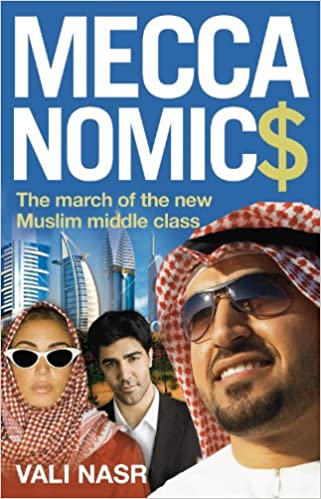
Meccanomics
The March of the New Muslim Middle Class
Author(s): Vali Nasr
Reviewed by: Toseef Azid
Review
The combined GDP of all the 57 Muslim countries (of around 2.2 billion population) is less than five per cent of the world GDP, or to put it differently, less than the GDP of one European country, Italy, which ranks as the fifth or sixth economy in the world. Ironically most of the Muslim states are on the verge of economic, political and social depression. The Muslim world lags in sciences, discoveries, innovations and inventions. Even if a number of state- based efforts for the development of Muslim economies have been observed, the results still leave much to be desired. These states are in the vicious cycle of political and economic instability. The current situation of the Islamic world leads to some unpleasant questions, one of which is: Is Islam the main barrier for the development and growth of these countries? If not, then how is one able to explain the current economic gap between the Muslim world and developed economies. The book under review tries to provide logical reasons for the economic gap between the Muslim countries and the developed world. It should be noted that this book was written before the Arab spring. Its analysis might have been different if it had been written after the recent Arab revolution.
Nasr tries to answer the following three main questions: (1) How is it possible for the Islamic world to compete with the Western world? (2) How is it possible for Muslims to deal with the capitalist and globalized world and simultaneously keep their own identity? (3) How will the young, educated Muslims, middle and business class, be able to change the fate of these countries?