Islamic Economics
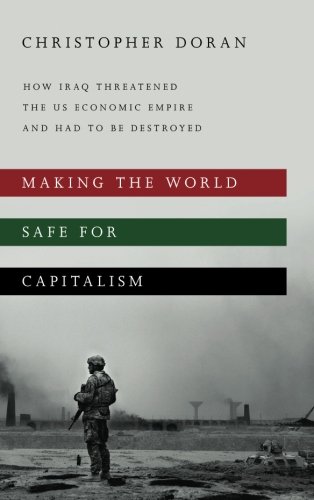
Making the World Safe for Capitalism
Author(s): Christopher Doran
Reviewed by: Abul Hassan, King Fahd University of Petroleum and Minerals, Dhahran, Saudi Arabia
Review
At the beginning of the twenty-first century, militarily powerful countries in the West made a major attempt to change the political landscape of the Middle East through forceful intervention but so far without any major success. Using as a pretext the terrorist attacks on the United States in New York City and Washington, D.C. on September 11, 2001, the US and a number of other European countries decided to intervene militarily in Iraq to eliminate Saddam Hussein. This was perceived as the first move in a broader plan aiming to establish democratic regimes in Iraq in particular and other oil rich Middle Eastern countries in general. Whether the Iraqi adventure was motivated primarily by oil interests or by political objectives is a discussion that is likely to continue for some time. However, the Iraqi adventure is widely considered as a failure. How things may look in ten years or so from now, one does not know. For the time being one knows that Iraq is still under occupation at a very high cost, with low levels of oil production and exports, and a political system constantly on the brink of collapse.