Review Article
Law and Subservience Part 1
Governance and Politics of Exclusion, Past and Present
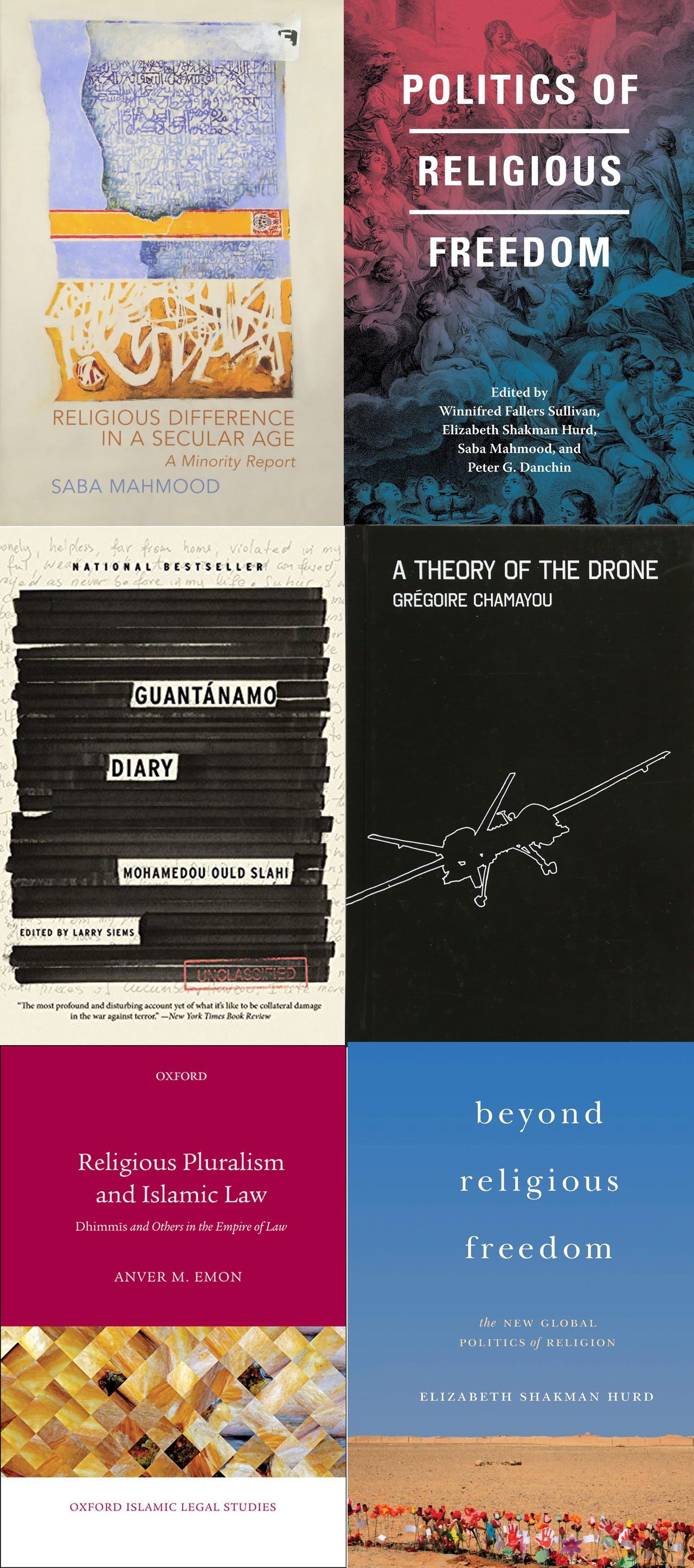
Author(s): Anver E. Emon & Winnifred Fallers Sullivan & Saba Mahmood & Peter G. Danchin & Mohamedou Ould Slahi & Grégoire Chamayou
Reviewed by: S Parvez Manzoor
Review
Any reflection on the nature of legal order in former faith-empires and contemporary secular-states must start with the realization that the relationship between state and law, which in secular modernity is paradigmatic of all sociopolitical, even philosophical and moral, discourses, is diametrically opposed and inverse in its hierarchal import. Whereas, in all pre-modern ‘political’ schemes of things, the Law, whether conceived as natural and universal or as revealed and historical, pre-exists the formation of the state and is posited to be the foundation of all political, moral, indeed cosmological order, in modern secular theory, law is quite simply the creation of the state. It is nothing but the expression of the sovereign will of the body-politic. Law, for moderns, is only state-law; all else is custom, norm, tradition, metaphysics, morality and else. Paradoxically, this axiomatic positivity of law, resting allegedly on the Spinozan insight that law must be ‘enforceable’, has been instrumental not only in severing the law’s ties with its putative transcendental moorings, but also in promoting a separation of moral and legal discourses. And yet the duality and bipolarity of law, its propensity to act as a bridge between facts and norms, between metaphysics and sociology, cannot be overcome by secularizing it and granting it indemnity within the sanctum of a sovereign state. For all its positivity, law remains both emblematic and pragmatic; it is an instrument of governance that is equally a rhetorical manifesto of political destiny. And this is as true of modern secular regimes as it is of former theopolities.