Islamic Thought and Sources
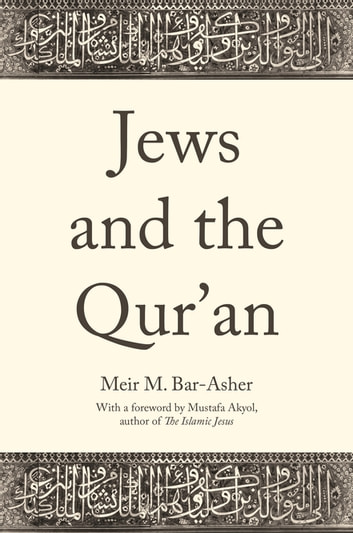
Jews and the Qur’an
Author(s): Meir M. Bar-Asher
Reviewed by: Muzaffar Iqbal
Review
Published by: Princeton University Press, 2022, 192pp. ISBN: 9780691211350.
Jews and the Qur’an is neatly divided into six chapters, five focus on the Qur’anic themes which are also present in the Bible, while the sixth, “The Place of Judaism and the Jews in Twelver Shiism”, explores Shiah attitudes toward Jews and Judaism in two specific areas: law and the notion that the descendants of Israel are a prototype for Shii Muslims.
Like most of the Jewish scholars of the nineteenth and early twentieth century who wrote on the Qur’an (Abraham Geiger, Ignaz Goldziher, David Sideresky, Josef Horovitz), the prism through which Bar-Asher reads the Qur’an is the one that presents the Qur’an as a plagiarised text which recounts Biblical narratives and themes. Seen through this perspective, the Prophet of Islam appears as a remarkable politician who “established himself, not just as a religious preacher, but also as a political leader” (pp. 23–24) in the first Islamic state in Madinah, and as a man who changed his strategies regarding the Jews as he gained more power. He concludes his book by depicting the Qur’anic presentation of the Jews as ambivalent, bearing a “complex dual perspective… on the Jews, the Hebrew Bible, and post-biblical Jewish literature” (p. 137). This is so because on the one hand, it is committed to the “Torah, the prophets and their statements, understood as divine revelations”, yet on the other hand, it casts doubts on the authenticity of the Jewish Scriptures of its time and accuses the Jews of having falsified them, “with the particular motive of suppressing or modifying passages that allegedly heralded the coming of Muhammad and Islam, as well as their triumph and superiority over all earlier religions, Judaism included” (p. 137).