Comparative Religion and Interfaith
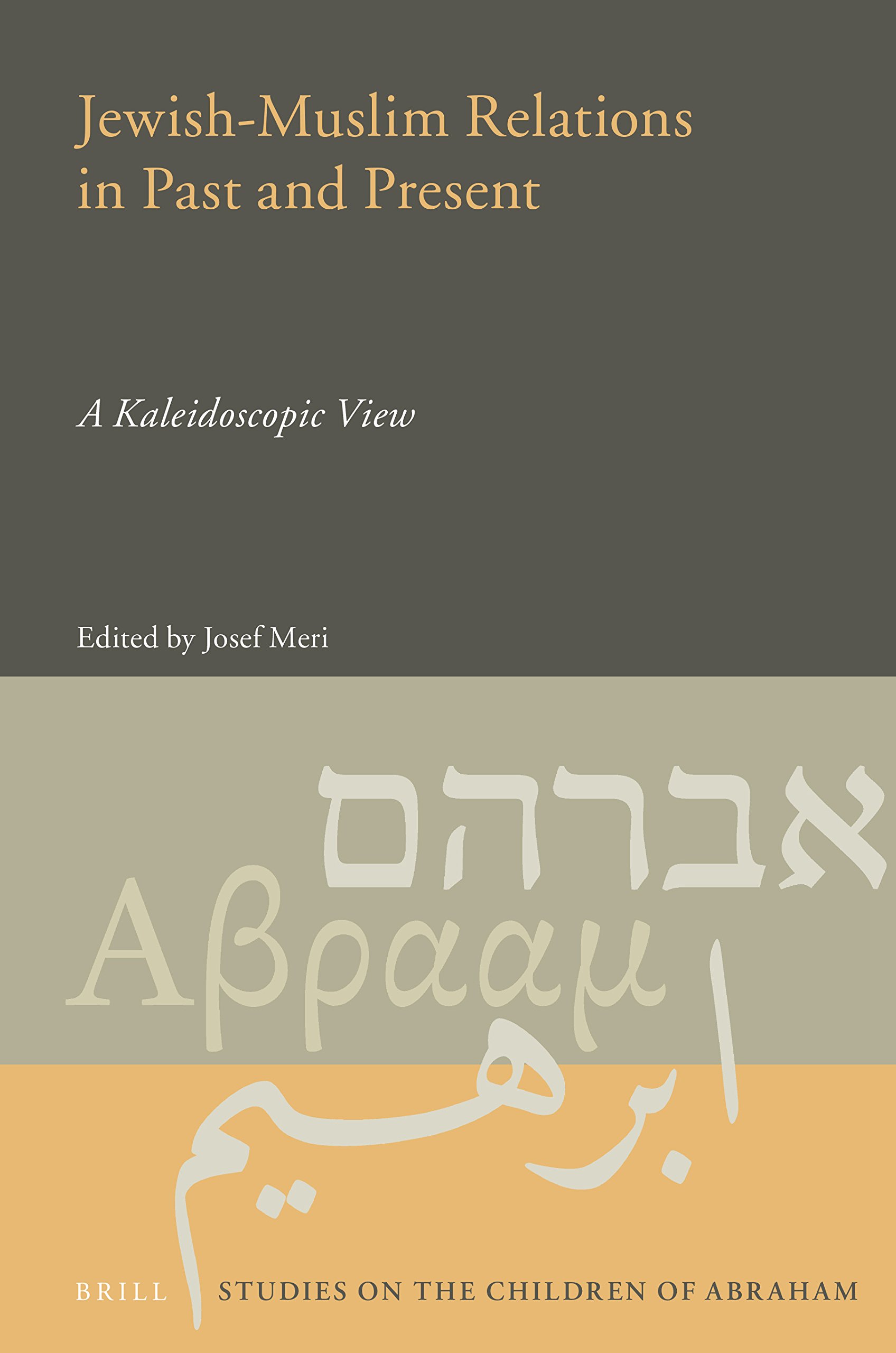
Jewish-Muslim Relations in Past and Present
A Kaleidoscopic View
Author(s): Josef Meri
Reviewed by: Karim Kocsenda, Abu Dhabi, UAE
Review
This slim volume does not focus on polemical exchanges between Jews and Muslims, but rather ‘highlights some of the diverse settings in which Jewish and Muslim ideas and practices intersect, interact, and are enriched’ (p. 2). It focuses on creative symbiosis, crosspollination of ideas, and intertwining cultural exchanges. The essays in here are inter-disciplinary, meaning that they span a number of modes of study from anthropology to history, linguistics to ethnomusicology. The first chapter has Norman Stillman recount the history of the study of Islamicate Jewry. This began in the nineteenth century as part of Orientalist research on Islam. Specifically, the Wissenschaft des Judentums scholars in Central and Western Europe who focused on the relation between Qur’anic studies and Jewish aggada literature, Hebrew poetry in al-Andalus, and Neoplatonic philosophy. Following this, French ethonogrpahers showed great interest in the language and culture of Jews living in their North African colonies and produced a great amount of material on them. This decreased in quantity (but not quality) after the French withdrawal from their colonies. Then there was the mass exodus of Jews from Islamic lands which led to “salvage” scholarship wherein there was a rush to ‘save’ Sephardic and Mizrahi Jewish identity (through recording their folklore, songs, and so on) before disappearance in the Israeli melting pot, or assimilation into Gallic culture in France.