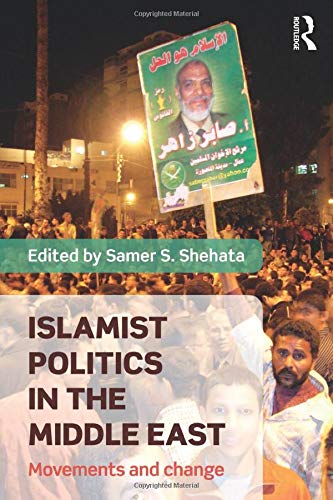
Contemporary Muslim World
Islamist Politics in the Middle East
Movements and Change
Author(s): Samer S. Shehata
Reviewed by: Elfatih Abdullahi Abdel Salam, International Islamic University, Malaysia
Review
For over three decades, Muslim politics, or political Islam, has been one of the most dynamic and contentious forces in the Middle East. Although there is broad consensus on the importance of political Islam, there is far less agreement on its character, the reasons for its success, the role of Islamic movements in domestic and international affairs, or what these movements portend for the future. The eleven essays in this volume, written by leading specialists in the field, address a number of the key questions through detailed case studies of the region’s most important Islamic movements, namely the Egyptian Muslim Brotherhood, Hamas, Hizbullah, Morocco’s Justice and Benevolence, the Jordanian Muslim Brotherhood, the Sunni Insurgency in Iraq and Islamic parties in Turkey and Iran. The topics include (among others) social networks and social welfare provision, Islamic groups as opposition actors, Islamist electoral participation, the intersection of Islam and national liberation struggles, the role of religion in Islamic politics, and Islam and state politics in Iran. The dramatic political events that took place in the Arab world in 2011 led some observers to mistakenly conclude that Islamic politics in the Middle East was in decline. After all, Islamic movements were not behind the mass uprising that brought down Zein Al-Abidine Ben Ali in Tunisia, after 23 years in power. Similarly, the organizers of the January 25, 2011 protests that led to Hosni Mubarak’s ouster in Egypt were largely liberal, internet-savvy, youth activists, not the Muslim Brotherhood. The same can also be said of the uprisings that shook Libya, Yemen, Syria and other parts of the Arab world.