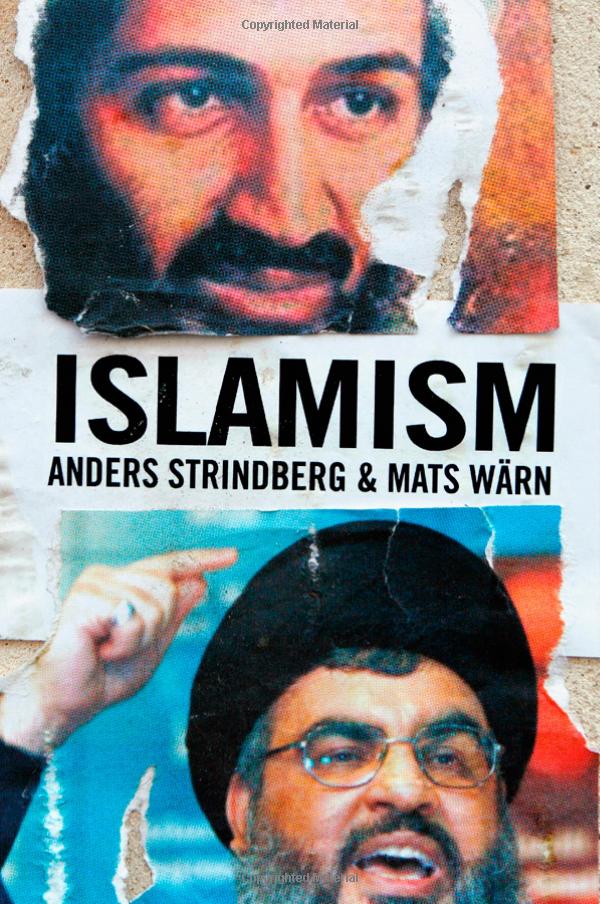
Contemporary Muslim World
Islamism
Religion, Radicalization, and Resistance
Author(s): Anders Strindberg & Mats Wärn
Reviewed by: Tauseef Ahmad Parray, Islamic Studies, Higher Education Department, Jammu and Kashmir
Review
After September 11, 2001 (or 9/11), Islam has been on the one hand frequently referred to as a “violent” and “terrorist” religion and on the other there was an overwhelming surge in the demand for information about Islam. One of the issues that has been highlighted much is the discourse on “Islamism”, which is a new label for “Islamic fundamentalism”, “Islamic conservatism”, “radicalism”, “political Islam”, etc. The definition of “Islamism” is laden with difficulty. Some scholars have defined “Islamism” as ‘the belief that Islam should guide social and political as well as personal life’ (Sheri Berman, 2003), ‘the building of an Islamic state’ (Oliver Roy, 2006), ‘a religious ideology that insists on the application of shari‘ah [Islamic] law by the state’ (Daniel Benjamin and Steven Simon, 2002), ‘an anti-modernist ideology of reform of Muslim countries’ (Carl Ernest, 2004); or simply as ‘a form of instrumentalization of Islam by individuals, groups and organizations that pursue political objectives’ (Guilain Denoeux, 2002), providing, in many ways, ‘political responses for today’s societal challenges by imagining a future, the foundations for which rest on reappropriated, reinvented concepts borrowed from Islamic tradition’. (p. 25)