Islamic Thought and Sources
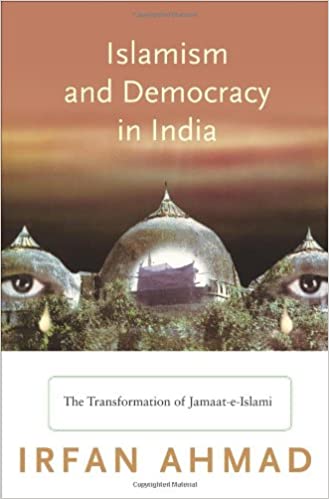
Islamism and Democracy in India
The Transformation of Jamaat-e-Islami
Author(s): Irfan Ahmad
Reviewed by: Rizwan Ahmad Falahi, London
Review
The book under review is the first research work on Jama[at-i-Islami in India since its re-organisation in 1948 after the independence of India in 1947. It is a revised version of a doctoral dissertation submitted to the University of Amsterdam in 2005. At the outset, one reads the following quote from Salman Rushdie: ‘The simple truth is that whenever religion gets into society’s driving seat, tyranny results.’ This quote sets the tone and approach applied in this book.
The theme around which the book revolves is the ‘transformation and moderation of the Indian Islamists’ and this transformation is ‘deeply ideological’ not ‘tactical’ (p. 2) (emphasis mine). For this purpose the author chose the Jama[at-i-islami Hind, SIMI, an independent student organization, and the SIO, JIH’s student wing, to conclude gleefully and sarcastically that in order to reconcile modernism, secularism and democratization, Iqamat-i-Din (the establishment of Islam) has not been central to JIH agenda because of ‘the Muslim public’s disavowal of the Jamaat’s ideology.’ (p. 8) He also accuses JIH members of hypocrisy or double standard: privately acknowledging that the Jama[at has considerably changed while denying it in public. The author has managed to turn a non-issue into a big issue by blowing it out of proportion. He also relies on, and then generalizes, trivial and individual/exceptional incidents in order to lead the readers to preconceived results. At the end, though, the work cites an impressive bibliography and presents lengthy explanatory notes to reflect the originality of the work and objectivity of the author!