Philosophy and Sufism
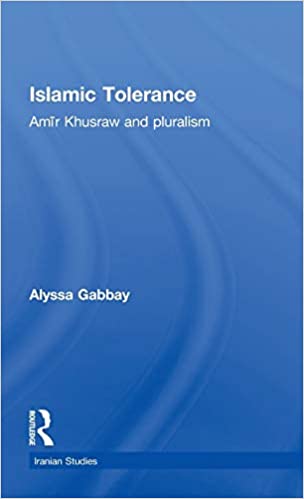
Islamic Tolerance
Amir Khusraw and Pluralism
Author(s): Alyssa Gabbay
Reviewed by: Abdur Rashid Siddiqui, Leicester, UK
Review
Amir Khusraw (1253- 1325) was a renowned scholar, poet, historian, musicologist as well as a courtier and soldier. His father, Amir Sayf al-Din Mahmud migrated from Central Asia during the turbulent years of the tyrannical rule of Chingiz Khan to the more peaceful India. Delhi was ruled at that time by a King of the Slave Dynasty, Sultan Shams al-Din Altamash. He was a generous and amiable person who cultivated friendship with men of letters and Sufis. Amir Sayf al-Din enrolled in the army of Altamash and later became a courtier. He married the daughter of [Imad al-Mulk, another courtier. There were three sons from this marriage and Amir Khusraw was the second. However, Amir Khusraw’s father died when he was only eight years old and so he was looked after by his maternal grandfather, [Imad al-Mulk. Being from Central Asia, Amir Khusraw’s family knew Turkish and Persian. He, of course, learned Arabic as well as other disciplines usually acquired by Muslims who aspire to be among the learned. The Urdu language was still in its infancy and Khusraw was instrumental in developing this language. We find that in some of the ghazals he composed one hemistich in Persian and the other in Hindi. His ghazals are still used in qawwalis (the ecstatic rendition of devotional lyrics) especially at the tombs of saints.
Khusraw was a disciple of Nizam al-Din Awliya’ and was buried near his mentor. He is also revered as a saint by some people. Their tombs, near Delhi, are thronged by people of all faiths where one can still listen to the music and poetry of Khusraw. He is said to have invented the sitar (a musical instrument) and also Indian rags (musical notes).