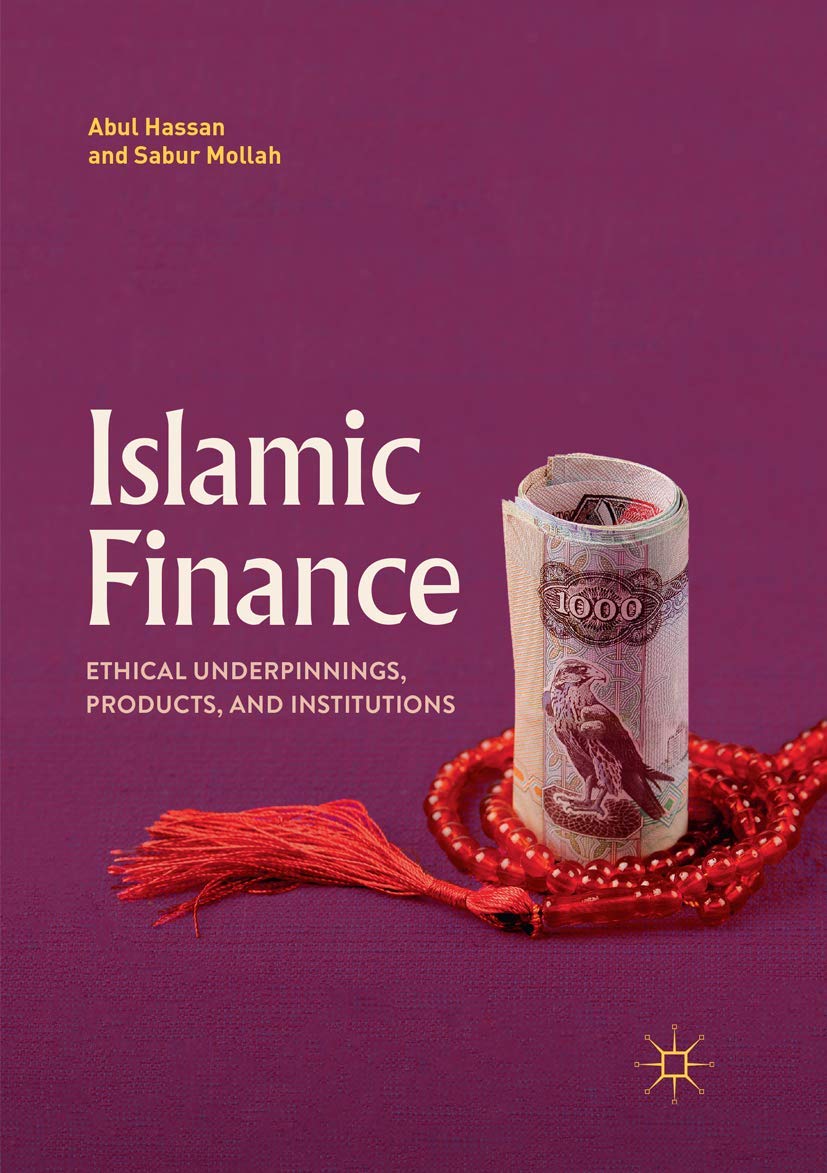
Islamic Economics, Banking and Finance
Islamic Finance
Ethical Underpinnings, Products, and Institutions
Author(s): Abul Hassan & Sabur Mollah
Reviewed by: Toseef Azid
Review
There was an increasing demand for creating an ethical and moral environment for sustainability in the world of finance after the financial crisis of 2008. As a result, a series of major books on the ethical and moral dimensions of the financial market, its institutions and instruments were published. The stakeholders of conventional financial market were fed up with the different regimes of interest. During their demonstration in Wall Street, the stockholders of conventional financial market called for Islamic banking. It has also been observed that during the above mentioned financial crises the Islamic financial institutions became more resilient. It is presumed in the circles of academics, financial experts and policy makers that Islamic finance is able to fulfill the requirements of triple bottom lines. Because of its ethical/moral nature, it covers simultaneously the 3Ps, i.e. people (the social security bottom line), profit (the economic bottom line) and the planet (the environment bottom line). Thus, there is a gradual revolution in the financial market through a change in its focus, so that instead of dealing with its quantitative aspects only, its qualitative aspects are also emphasized.