Islamic Economics, Banking and Finance
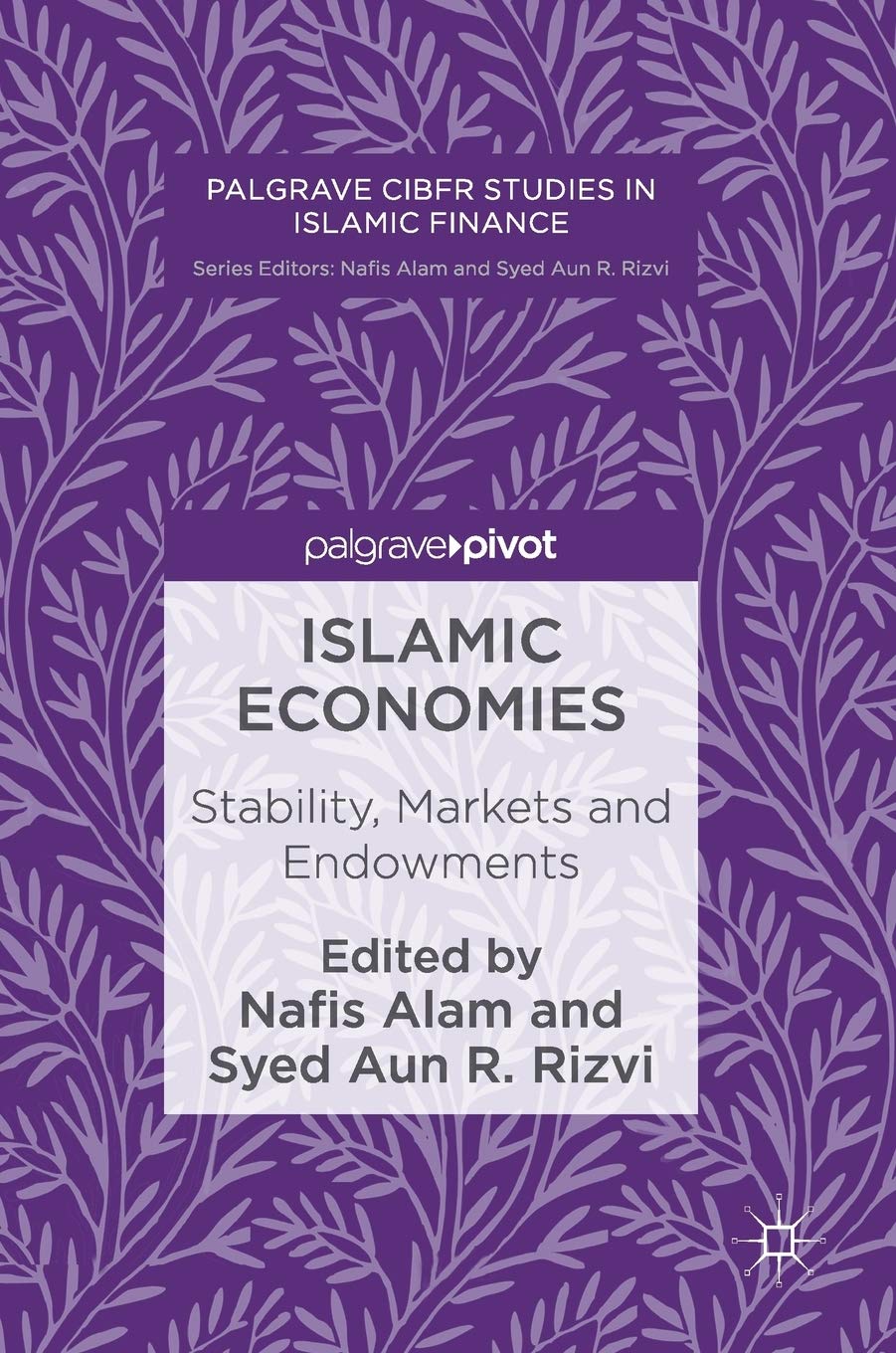
Islamic Economies
Stability, Markets and Endowments
Author(s): Nafis Alam & Syed Aun R. Rizvi
Reviewed by: Emir Camdzic, Markfield Institute of Higher Education, UK
Review
The book consists of seven chapters which address some issues of the conventional economic system as well as the areas in which Islamic economics contribute to its overall stability. The book is underpinned by the philosophical foundations of Islamic economics as encapsulated in maqasid al-Shari[ah (the main objectives of Islamic law) which further aim to reinstate the theory of Islamic economics whose aim is to provide well-being in society. In the first chapter, the authors discuss the different definitions of Islamic economics and political economy in light of the tenets of tawhid, risalah and akhirah. All financial and economic accomplishments must be underlined by such principles which should regulate and guide people’s lives. The realisation of freedom, as one of the objectives of Islamic law, is also discussed from a maqasidi perspective. The chapter further sheds light on different views of Islamic economics held by economists, where the key focus is on satisfying human needs, at the moral and social levels. Also outlined are the key features of Islamic economics such as equality, justice and magnanimity. Perhaps, the authors could have included Ibn [Ashur’s view on maqasid al-Shari[ah which covers aspects interlinked with contemporary social issues.