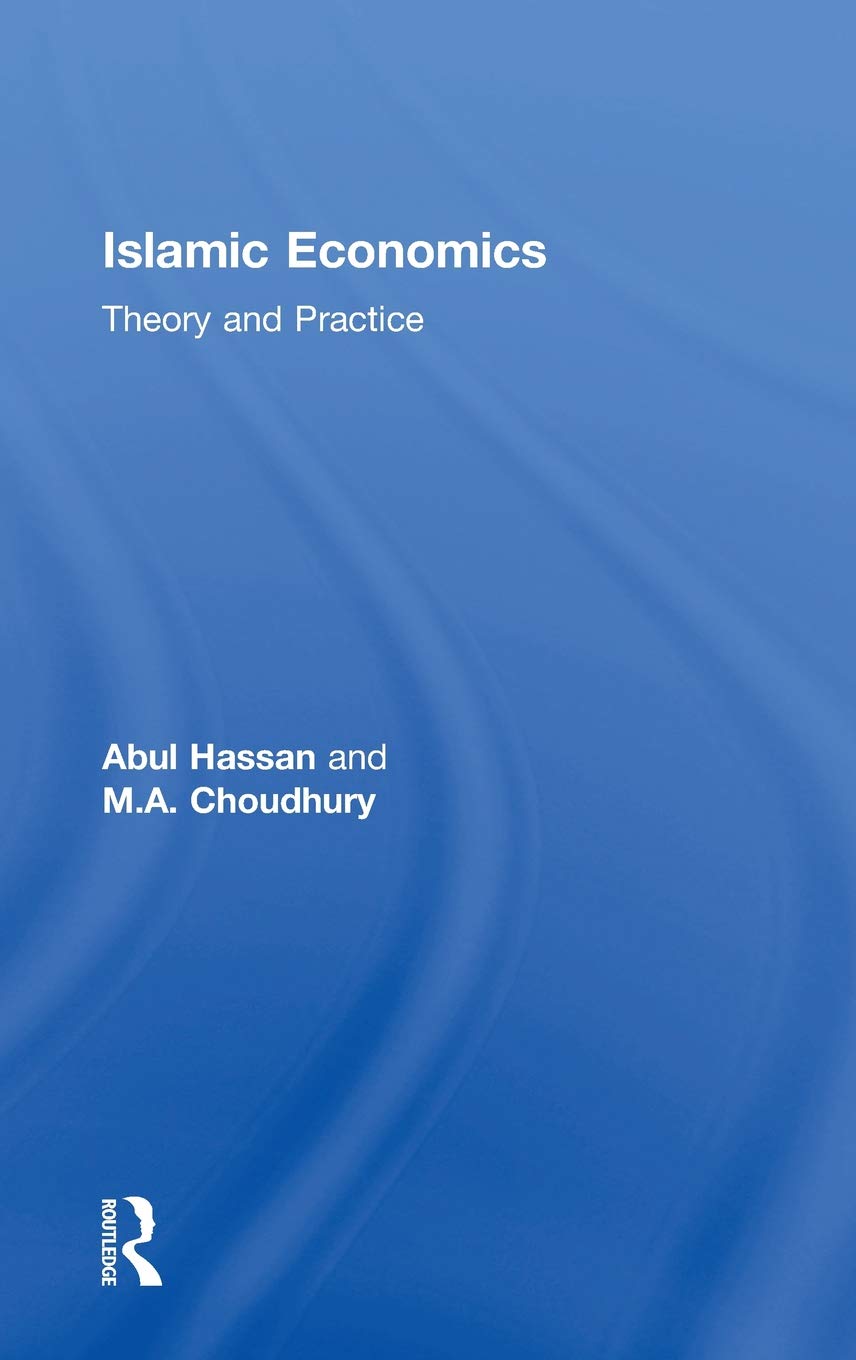
Islamic Economics and Finance
Islamic Economics
Theory and Practice
Author(s): Abul Hassan & M.A. Choudhury
Reviewed by: Taimur Sharif, Newman University, Birmingham, UK
Review
Islamic Economics has flourished as a separate field of study in the mainstream fields of the Social Sciences and Business Studies for over a decade. Due to a lack of consensus among Islamic economists and practitioners, the authors have used various themes or perspectives such as political economy, microeconomics, macroeconomics, methodological approaches and so on to develop a cohesive content in their book. Writing a textbook on such a diversely vast area of knowledge in a synchronized manner is not an easy task. The task becomes more complex when one considers that Islamic economic concepts have aroused growing interests in many non-Muslim countries, both in academic institutions and financial sectors. In light of this, this book has looked into Islamic economics from the point of view of sociomoral justice and efficiency, which can be achieved through growth and employment creation. The book shows a great deal of concern for the just distribution of wealth and income and the reduction of inequality which, interestingly, are reflective of some vital sustainable development goals (SDGs). Hence, the evolution of Islamic Economics as a separate discipline is able to postulate an alternative approach to the global economy that is highly influenced by corporate greed and the ills of the capitalistic system. The authors clearly emphasise these principles while introducing related concepts. Moreover, they take a dynamic stance regarding the modelling of Islamic economic methodology just as it relies on the original sources in its theorising about the Islamic economic system. These are some of the notable features of this book.