Islam and the West
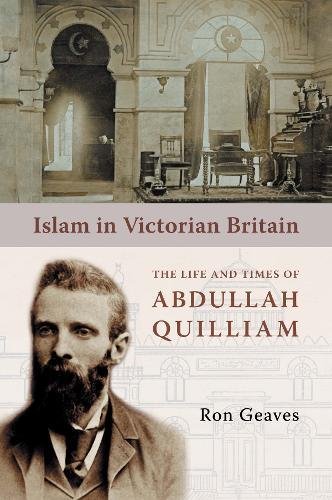
Islam in Victorian Britain
the Life and Times of Abdullah Quilliam
Author(s): Ron Geaves
Reviewed by: Mohammad Siddique Seddon, Markfield, UK
Review
The very British shaykh al-Islam, Abdullah William Henry Quilliam (1856-1932), is perhaps the most iconic, and yet controversial, figure in the history of British Islam. Surprisingly there are relatively very little contemporaneous accounts of Quilliam that merit any serious consideration beyond John J. Pool’s, Studies in Mohammedanism (1892) and Sir Thomas W. Arnold’s The Preaching of Islam (1896). The latter study contains only a brief and vague portrait of Quilliam and records his conversion to Islam whilst travelling in Morocco in 1884, noting that Quilliam was struck by the sobriety and good manners of the Muslims he encountered. Arnold records that Quilliam thereafter returned to his home city of Liverpool to establish his “Muslim mission”. Unlike the overwhelming majority of writings recording Quilliam’s activities in the same period (including Pool’s), Arnold is particularly non-judgemental. Whilst noting a hybrid form of Islam with a distinctly British identity whose indigenous adherents are ‘profoundly ignorant of the vast literature of Mohammedan theologians’, Arnold explains ‘they have introduced into their religious worship certain practices borrowed from the ritual of protestant sects, such as the singing of hymns, praying in the English language etc’ (p.456)