Short Reviews
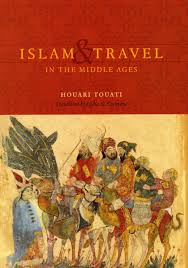
Islam and Travel in the Middle Ages
Author(s): Houari Touati
Reviewed by: Abdur Raheem Kidwai
Review
Translated from French by Lydia G. Cochrane, this scholarly work brings out the epistemological, philosophical, geo-political and economic dimensions of the concept and practice of ritilah (travel) in the Muslim world, especially in the Middle Ages. In so doing, Touati portrays the vibrant intellectual life of early Muslim society. Long, arduous and hazardous journeys were undertaken during the early period of Muslim history: Hadith scholars for collecting and verifying the Prophet’s sayings, linguists and lexicographers visiting the desert areas for learning Bedouin Arabic idiom and usage, geographers exploring and mapping new territories, scientists studying the flora and fauna of the new lands, travellers in search of surveying and reporting different cultures and societies, and students in general for undertaking their academic pursuits. In the above context some of the prominent figures under focus are: [Abdullah ibn al-Mubarak (d. 181H/797), Abu [Amr ibn al-[Ala’ (d. 154?/770?); Abu Bakr ibn al-[Arabi (d. 534H/1148), Ahmad ibn Hanbal (d. 241H/855), Bistami (d. 20H/874), Bukhari (d. 256H/869), Dhu’l-Nun al-Misri (d. 245H/859), al-Asma[i (d. 213H/828), al-Jahiz (d. 255H/868), Junayd (d.298H/910), al-Khatib al-Baghdadi (d. 463H/1070), Malik ibn Anas (d. 179H/795), al-Mas[udi (d.ca 339H/950), Muqaddisi (d. ca. 380H/990) and al-Shafi[i (d. 204/819).