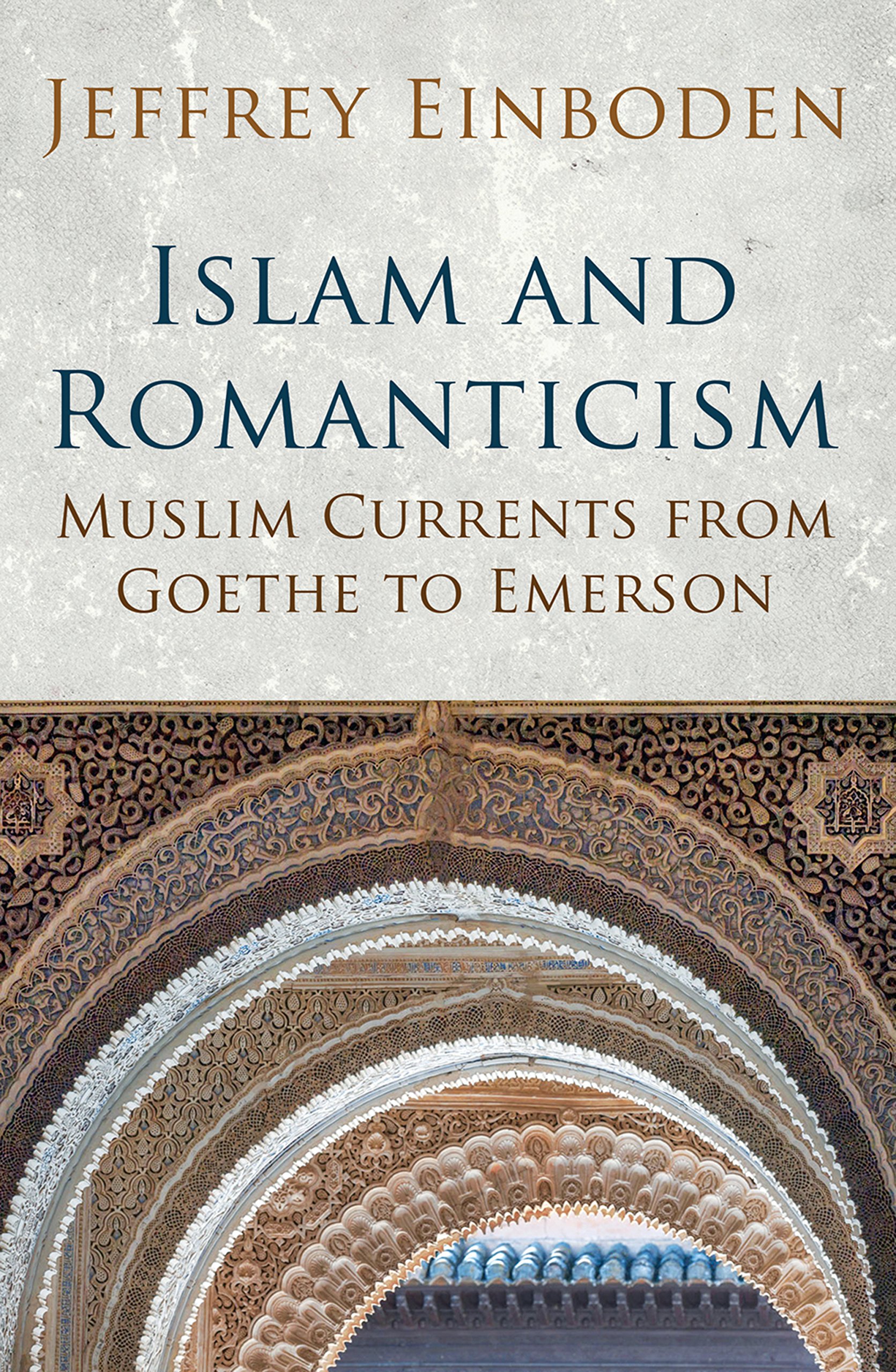
Islam and Orientalism
Islam and Literary Romanticism
Muslim Currents from Goethe to Emerson
Author(s): Jeffrey Einboden
Reviewed by: Abdur Raheem Kidwai
Review
A recent, gratifying trend in Western academia has been the appearance of substantial and insightful works which objectively chart out the West’s engagement with Islam/the Prophet Muhammad (peace be upon him) and Muslims, refreshingly free from the irksome triumphalist divide between “Us” and “them”. On the contrary, some of these works candidly admit the Western misconceptions and misperceptions of Islam/Muslims. Some of these studies go even a step further by way of bringing home the positive, life-giving influence of the Islamic texts, particularly the Qur’an, on the Western theological, literary and cultural ethos. Jeffrey Einboden’s book under review stands out as an earnest and highly rewarding attempt to identify and elucidate the impact of Islam on Johann Wolfgang van Goethe (1749-1832), Johann Herder (1744-1803), Karl Schlegel (1772-1829), Joseph Hammer (1774-1856), S. T. Coleridge (1772-1834), Robert Southey (1774-1843), Lord Byron (1788-1824), W. S. Landor (1775-1864), P. B. Shelley (1792-1822), Mary Shelley (1797-1851), Washington Irving (1783-1859), E. A. Poe (18091849) and R. W. Emerson (1803-1882). In terms of his sympathetic attitude towards things Islamic, this study surpasses earlier ventures of an identical import, namely Matthew Dimmock’s Mythologies of Prophet Muhammad in English Culture (2013), Frederick Quinn’s The Sum of All Heresies: The Image of Islam in Western Thought (2008), John Tolan’s Sons of Ishmael: Muslims Through European Eyes in the Middle Ages (2008) and the fairly recent Sophia