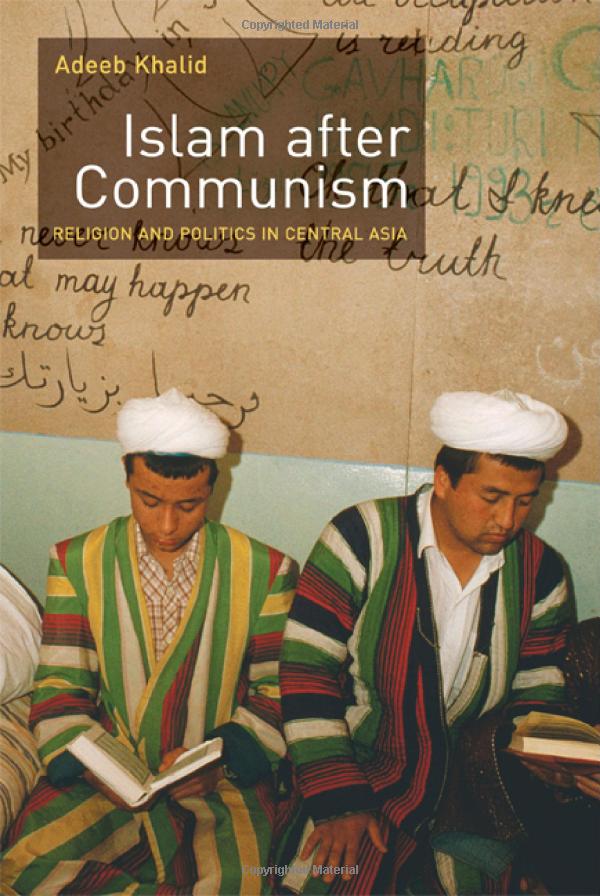
Contemporary Muslim World
Islam after Communism
Religion and Politics in Central Asia
Author(s): Adeeb Khalid
Reviewed by: Ruqaiyah Hibell
Review
This thoughtful, insightful and reflective book details the effects of seventy years of Soviet hegemony over the former satellite states of Central Asia. It assesses the impact of Soviet rule on Islam, the dominant religious faith of the region, and examines how the region has fared since the collapse of Communism in terms of its relationship to Islam. The analysis is established, firstly, by exploring the nature of the history of Islam in the region to which the author devotes considerable coverage. Khalid contends that understanding contemporary history is vital to understanding the forms of Islam that have emerged post-Communism, and that attempts to comprehend Islam in Central Asia are coterminous with assessing the historical experiences of the region. As several chapters are devoted to the historical background to Islam in Central Asia, the book appears somewhat inappropriately mistitled. Coverage given to the establishment of Communism in Central Asia, alongside an Introduction which offers a discursive examination of Islam set in a wider global context, does not fall into the category of Islam after Communism in Central Asia.