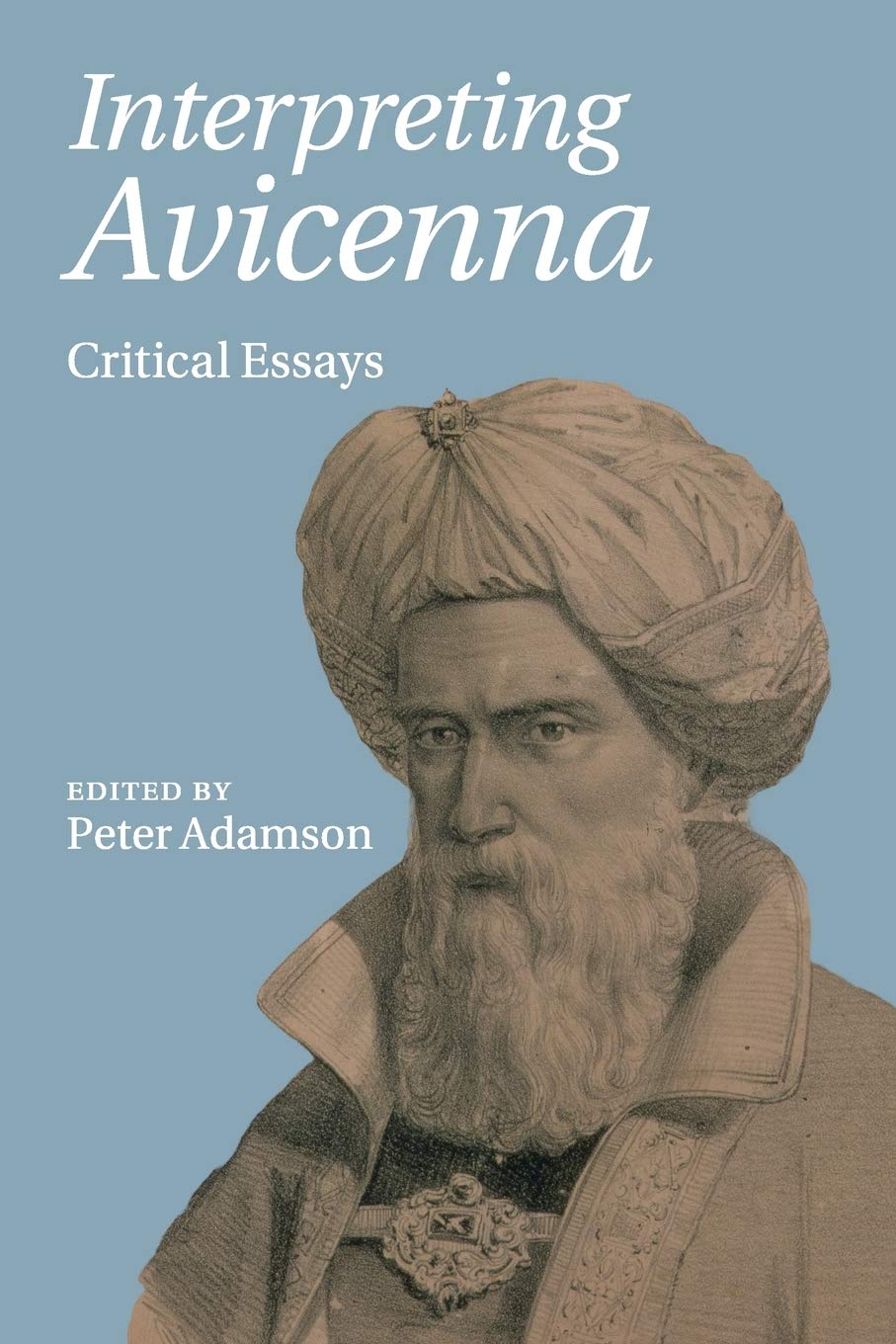
Short Reviews
Interpreting Avicenna
Critical Essays
Author(s): Peter Adamson
Reviewed by: Murad Wilfried Hofmann, Bonn, Germany
Review
This exceptionally learned, highly technical, and extremely well edited book (without a single printing mistake) comes as an anthology with thirteen contributions from Canada, France, Germany, Great Britain, Italy, and the USA, with bibliographic quotations in Arabic, English, French, German, and Italian. Individual chapters on different aspects of the literary contribution of Avicenna (Ibn Sina) are by American historian Peter Adamson (Munich), Amos Bertolacci (Pisa), Deborah L. Black (Toronto), Gad Freudenthal (Paris), Dimitri Gutas (Yale), Jon McGinnis (Missouri), Dag Nikolaus Hasse (Würzburg), mathematician Stephen Menn (Berlin), Peter E. Pormann (Manchester), David C. Reisman (Chicago d.2011), Tony Street (Cambridge), Robert Wisnovsky (McGill), and Mauro Zonta (Rome). As a curiosity, feminist Black (Toronto) shifted her text into she-form. For full enjoyment of the volume, readers should have a good grounding in mathematics and be at home in the history of philosophy, appreciating that Ibn Sina (born 980 in Bukhara; died 1037 in Hamadhan) in the medieval period had been the most influential single thinker, even within Jewish culture. As a giant in the history of ideas (and well aware of his autodidactic genius) he strongly influenced Western philosophy by replacing its previous focus on Aristotle. In fact, his philosophical parable, Hayy b. Yaqzan (Alive, Son of the Awake), even now is still popular with people both young and old.