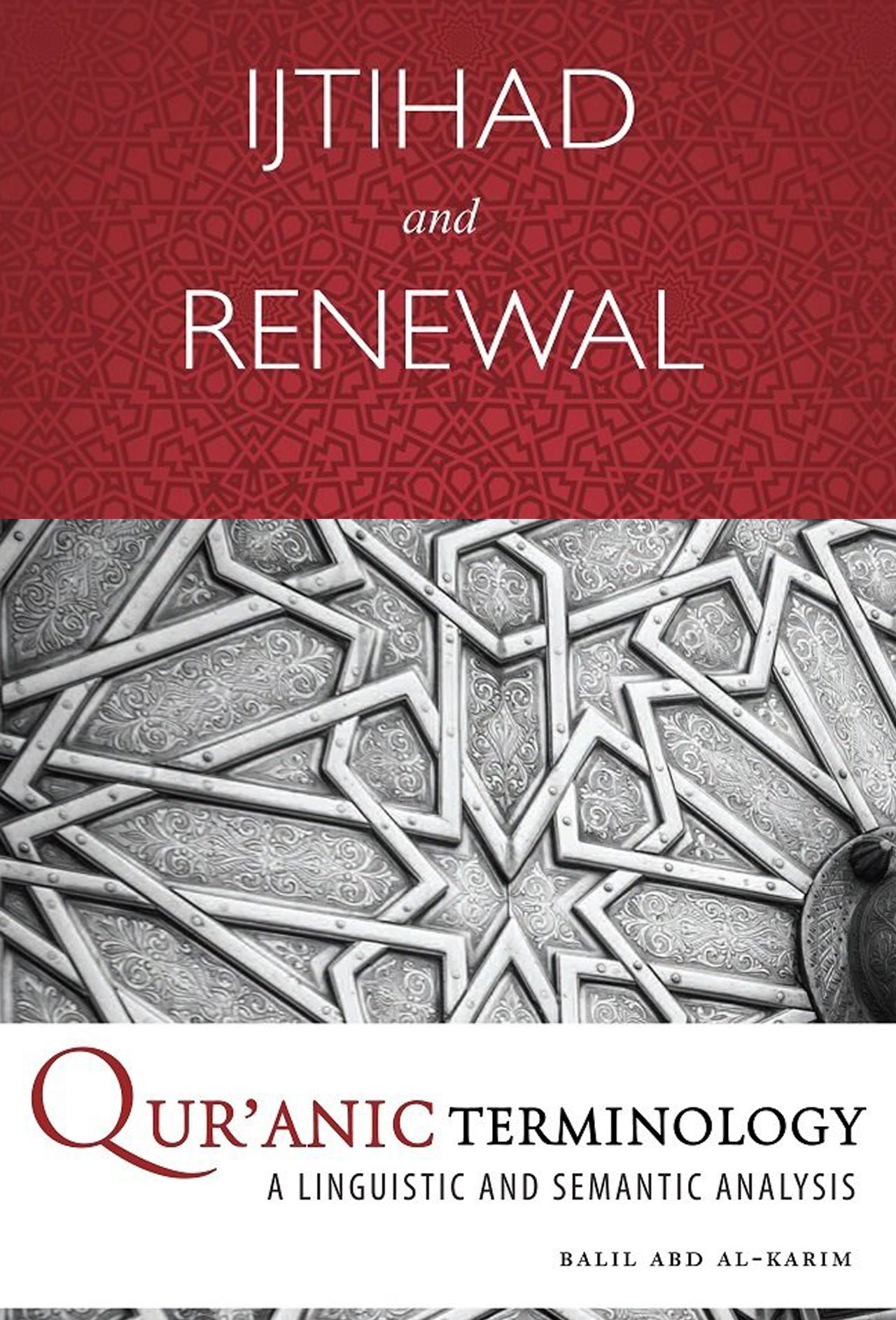
Islamic Thought and Sources
Ijtihad and renewal and Qur’anic terminology
A linguistic and semantic analysis
Author(s): Said Shabbar & Balil Abd al-Karim
Reviewed by: Harfiyah Ball Haleem, London, UK
Review
Both these books are translations of abridgements of longer works in Arabic. As such they are not provided with dates, footnotes, references, indexes or bibliographies and readers are advised, in the prefaces, to go back to the original (Arabic?) works to look for these details. Their aim is ‘to help readers benefit from available information as easily, effectively and efficiently as possible …,’ ‘in an age in which time is at a premium’. Nancy Roberts’ translations seem to be admirably clear and readable as intended, especially given the very difficult task of making subtle Arabic and Qur’anic terminology understandable in English. The subjects of the books are both important for epistemology in this age of ‘fake’ everything, including news and information. How can we distinguish truth from falsehood? Both are books of terminology and start with definitions of relevant Arabic concepts, which can be rather like reading a dictionary, although the Islamic terms in both are a rich source of meaning and thought. Section One of Ijtihad and Renewal goes into the opinions of earlier scholars, including some recent ones, on the distinctions between ijtihad and opinion, methodical requirements and conditions of ijtihad and the Agreement-Disagreement dialectic.