Islamic Thought and Sources
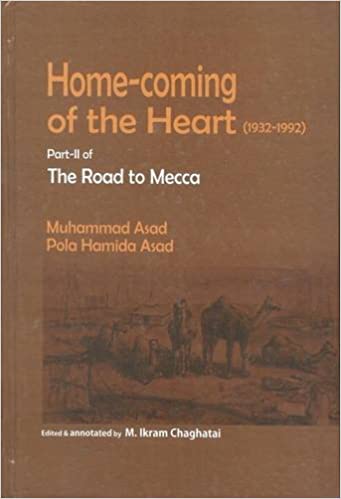
Home-coming of the Heart (1933–1992)
Author(s): Muhammad Asad and Pola Hamida Asad
Reviewed by: Murad Wilfried Hofmann, Bonn, Germany
Review
Muhammad Asad – journalist, diplomat, activist, writer and scholar – is considered one of the most influential Muslim intellectuals of the 20th century, and that in a period rich in outstanding Western Muslim personalities such as René Guénon, Marmaduke Pickthall, Martin Lings, Alija Izetbegovic, to name but a few.
Asad was born into a Polish-Jewish academic family in Lemberg (Lvov) in (Austrian) Galicia, on 2 July, 1900. Having tried in vain as a teenager to be accepted into the Austrian army in World War I, he began his career in Vienna as a student of biology, philosophy, and art. But in the early 1920s he was drawn to Berlin, the most exciting city at that time. There he made a name for himself writing film scenarios for Friedrich Murnau, associating with Max Reinhard, and sensationally interviewing the Russian poet Maxim Gorki who was living incognito. No wonder that Frankfurter Zeitung dispatched Asad, the lapsed Jew, to Jerusalem as a reporter. In Jerusalem he fell for Arab culture, as reflected in his first book, Unromantic Orient (1924). His love for the religion of the Arabs was discovered only subsequently.
On 27 April 1927, Asad became Muslim, in Cairo, and married Elsa Schiemann, a German painter who was 22 years older than him. They immediately set out for Hajj, but in Makkah Elsa died from malaria. Asad remained in Saudi Arabia, becoming a friend of Emir [Abd al-Aziz, the future king. Submerged in Arab culture, Asad absorbed the very Bedouin Arabic the Prophet of Islam had spoken. This was enhanced by his second marriage to Munirah bint Husayn ash-Shammar. (Their son Talal, born in 1932, is a famous American cultural anthropologist.)