Review Article
God and Muhammad
In Search of an Amicable Living Amidst Conflicting Perceptions
Author(s): Miroslav Volf & Fred M. Donner & F. E. Peters & By Steve Bell & Colin Chapman & Thomas Kidd
Reviewed by: Ataullah Siddiqui, Markfield Institute of Higher Education, UK
Review
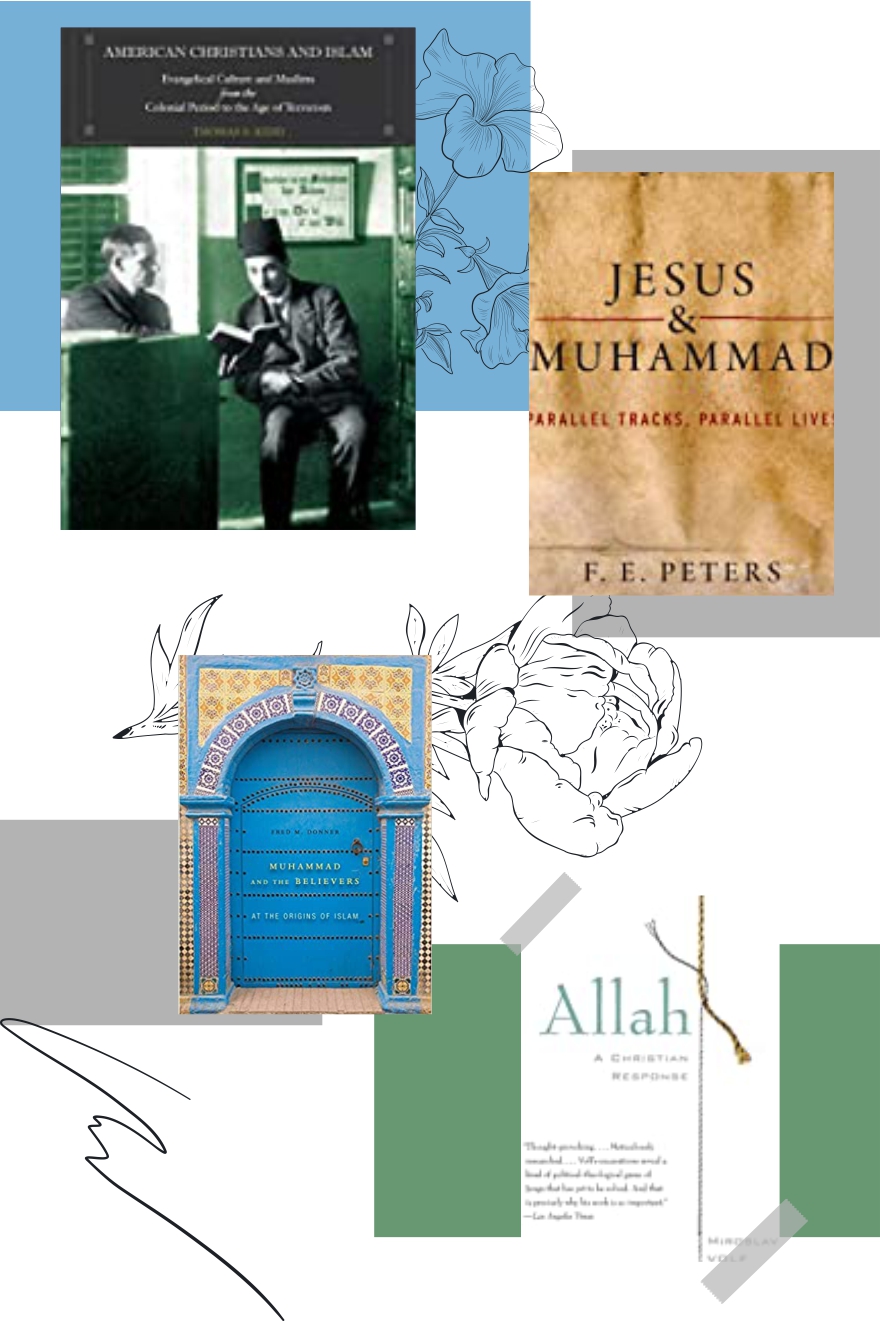
Muhammad and the Believers: At the Origins of Islam, by Fred M. Donner.
Jesus and Muhammad: Parallel Tracks, Parallel Lives, by F. E. Peters.
Allah: A Christian Response, by Miroslav Volf.
Between Naivety and Hostility: Uncovering the Best Christian Responses to Islam in Britain, by Steve Bell and Colin Chapman (Eds.).
American Christian and Islam: Evangelical Culture and Muslims from the Colonial Period to the Age of Terrorism,
by Thomas Kidd.
The person of the Prophet Muhammad (peace be upon him) is central in the Islamic faith. Muslims believe that God communicates to humanity through His prophets and messengers. They also believe that the Revelation brought by Muhammad is the ultimate Revelation. It is the Prophet’s testimony that Muslims believe that not only does God exist, but He also guides humanity, and thus human beings are accountable to Him. While the ultimate focus remains on the Hereafter, Islam does not allow the present world to slip out of hand. This world is equally important and necessary for the believers’ success in the Afterlife. Following the example of the Prophet Muhammad is unquestionably the safe path via which the believers can navigate their way from this world to the next. The hidayah, God’s guidance, to humanity is modelled on the uswah tiasanah, the good example of the Prophet. Servitude to God is inherently linked to submitting to the teachings of the Prophet Muhammad. However, the secular world and Christian redemption narratives have not been so kind to him. Even when they do tend to tolerate the Muhammad of Makkah, they wish to expunge part of the Prophet’s mission and ministry. Madinah is ‘too un-Christian’ and ‘invasive’ of the secular space.