Islamic Thought and Sources
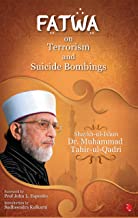
Fatwa on Terrorism and Suicide Bombings
Author(s): Dr Tahir-ul-Qadr
Reviewed by: M. Mansur Ali, Cambridge Muslim College, UK
Review
This is the translation of an Urdu fatwa (Dahshat gardi awr fitnae khawarij) written by the author primarily to condemn terrorist activities taking place in the Asian sub-continent. In the original Urdu fatwa the author has a disclaimer saying that the writing of this fatwa is not politically motivated but a sincere attempt to rescue Islam from being hijacked by a discourse on terror. His intention is to show the beauty of Islam and that terrorism vitiates this beauty. It is an exhaustive piece of work and reads like a classical Islamic law manual: first looking at the linguistic analysis of key words, seconded by scriptural evidence from the Qur’an and Hadith, followed finally by the opinions of the legal experts. The English translation first discussed at a ‘historical launch’ press conference in London in March 2010 which was later published as a 512 page monograph in December 2010, had attracted much media attention. The introduction has also been translated into many languages including Arabic, French, German and Norwegian. It is also accompanied by a website, a Facebook and Twitter page. The English translation of the fatwa is preceded by a foreword and an introduction by two eminent scholars in their subject area.
In the forward, Professor John Esposito places the fatwa in its historical context by showing that it is but one from a line of condemnations by Muslim scholars against terrorism and indiscriminate killing. He quotes authorities such as Timothy Winter, Yusuf al-Qaradawi and Abdul Aziz Al al-Sheikh the grand mufti of Saudi Arabia. He makes reference to two important initiatives by Muslim scholars worldwide in their collective condemnation of terrorism: the Amman Message (2004-5) and ‘A Common Word Between Us and You’ (2007). Dr Tahir-ul-Qadri’s fatwa is an important continuation of the Muslim denunciation of terrorism. The author of the introduction, Dr Joel Hayward, a scholar of war and strategy, expresses his frustration that hitherto condemnations of terrorism have not done anything to convince non-Muslims of the peaceful nature of Islam, neither have they stopped Muslims from being radicalized. In March 2010, though, he breathed a huge sigh of relief.