Islamic Thought and Sources
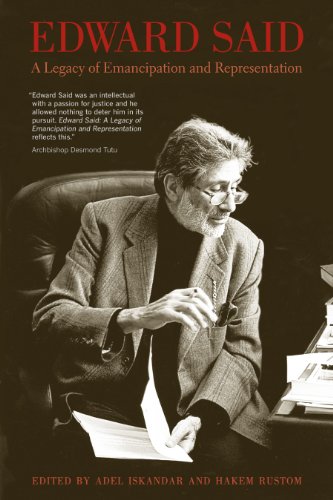
Edward Said
A Legacy of Emancipation and Representation
Author(s): Adel Iskandar & Hakem Rustam
Reviewed by: S Parvez Manzoor
Review
Edward Said was a giant among men, possessing towering intellect, unimpeachable humanity and inexhaustible compassion. He also had inimitable facility with language, unsurpassed urbanity and a commitment to a politics of humanity that few could match. Anyone who ever came in contact with him, no matter how brief or casual the encounter, could not help falling in love with him. Anyone who ever approached his texts remained forever in his debt, invariably inspired and enchanted, but also emancipated from sectarian passions and infused with a hope for our human community. His intellectual influence, not only in his own constituency among the dispossessed and the marginalized, but also in the bastion of knowledge itself, in the academy and its disciplines, is impossible to overstate. In these times, when Orientalism has returned with a vengeance, when imperialism is no longer a scourge of the past, when the Clash of Civilizations is more than an academic nicety, we miss him immensely and inconsolably. It is with these feelings that the Muslim reader needs to thank everyone associated with the writing and production of this book. Nothing could be more befitting for a generation so deeply inspired by Said’s thought than to pay homage to a great humanist who went far beyond the call of duty, or the claims of his ancestral faith, to affirm his kinship with the Muslims, and did so with such sincerity and eloquence. As a remembrance of a great man and a continued dialogue with his humanist legacy, the present effort is as good as it gets; it is truly worthy of the towering intellectual who broadened the humanity of a whole generation, our own.