Islamic Thought and Sources
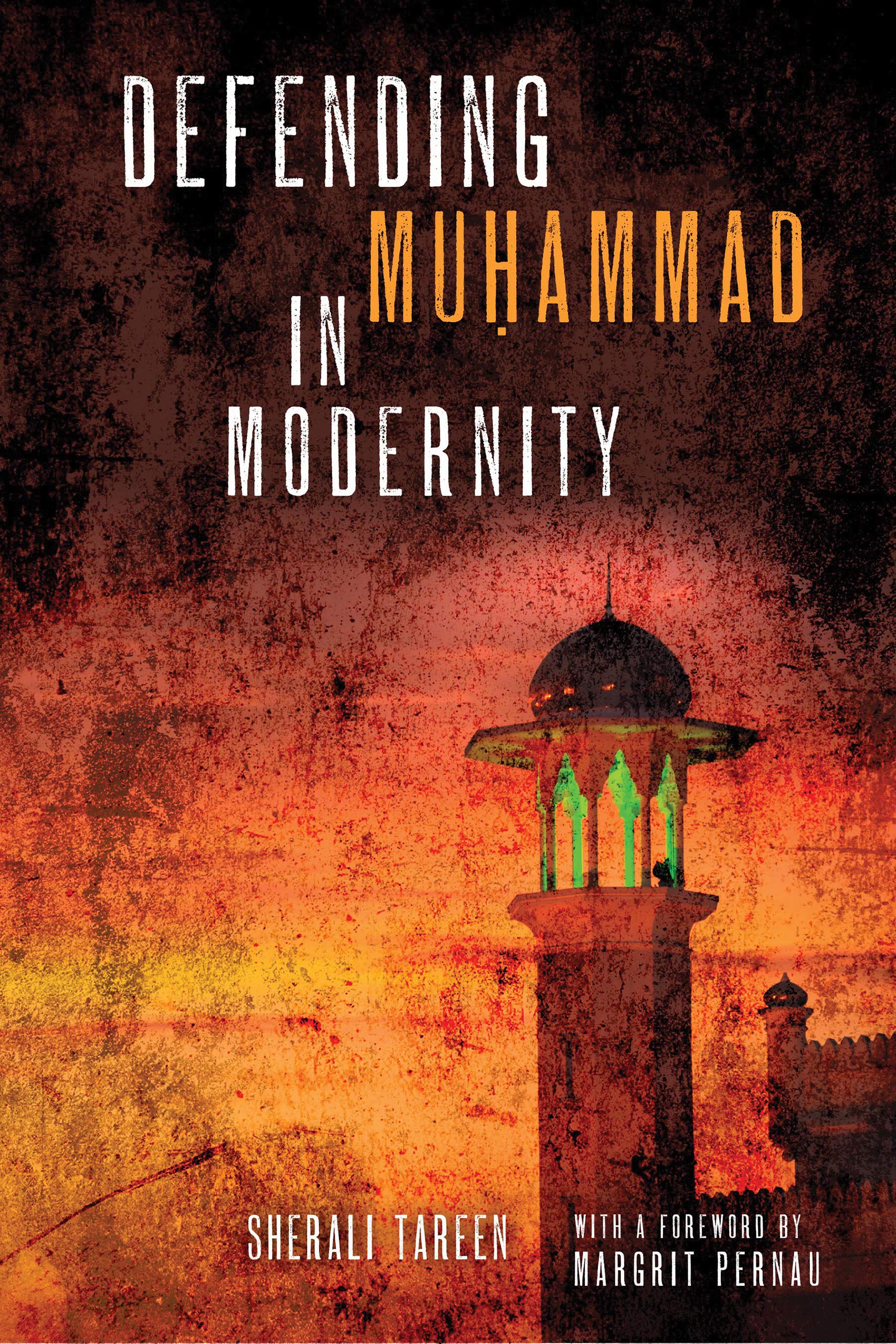
Defending Muḥammad in Modernity
Author(s): Tareen SherAli
Reviewed by: Ian G. Williams, Markfield Institute of Higher Education, Birmingham, UK
Review
There is a significant Western scholarly bibliography on the world of the ulema of the late 18th and 19th centuries in South Asian Islam. A crucial period, however, is the years of the socio-political and religiously transformative period of the supplanting of the Mughal era and the beginning of British colonial rule.
In this new study SherAli Tareen, an associate professor of Religious Studies at Franklin and Marshall College, offers a detailed examination on the intra-faith discourses, internal debates, and writings generated by Muslim theologians, such as Rashid Ahmad Gangohi (1826–1905 CE) and Ashraf [Ali Thanwi (1863–1943 CE). The focus of the study is on a complex and contentious dispute which has continued into contemporary Islam and, by migration, has become a global concern, viz. the Barelvi-Deobandi polemic. The Barelvi and Deobandi groups are two reform movements with beginnings in colonial South Asia. For almost two-hundred years these debates have cast both shadows and intellectual light on the religious practice of the faith, and faith formulations, of postcolonial South Asian heritage Muslims in profound ways, both in the region and in communities around the world.