Islam and the West
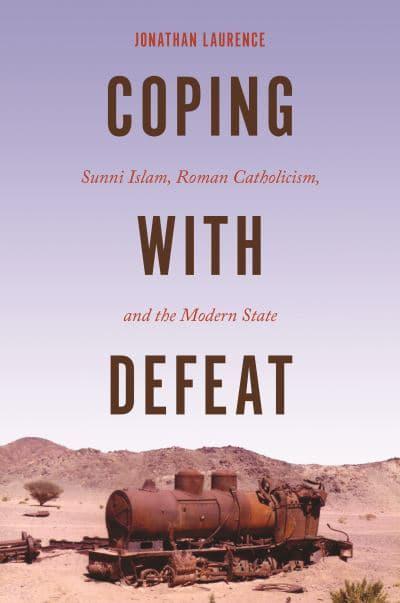
Coping with Defeat:
Sunni Islam, Roman Catholicism, and the Modern State
Author(s): Jonathan Laurence
Reviewed by: Muzaffar Iqbal
Review
Publisher: Princeton University Press, Princeton, NJ, 2021, xxvi+578pp. ISBN: 9780691172125
Coping with Defeat is an unusual book not just because it compares two widely different religious entities (Roman Catholicism and “Sunni Islam”), but also because it blends and blurs boundaries between academic scholarship and journalism, history and run-of-the-mill political statements published in newspapers, trendy infographics and archival research, and poorly-reproduced pictures and cartoons from newspapers with tables and charts based on research data collected over the years. Its 113 illustrations, 27 tables, and 61 pages of notes, comprising references cited from works in its 47–page bibliography demonstrate serious engagement with existing scholarship, but only of a particular kind: the one that conceives Islam as having no inherent agency and stable and unchanging set of beliefs which have been the main kinetic force behind the emergence of its religious and administrative institutions to regulate and facilitate communal praxis. To be sure, these institutions have changed form, administrative structures, and their relationship with the state over the course of centuries, but no one has ever considered them as institutions which define Islam à la Catholic Church defining the fundamental credal positions of Christianity; rather, they are a product of the diverse social and political settings in which Muslims have lived since the beginning of Islam and their function has been to serve, regulate, and increasingly to control the religious practices of the community.
Jonathan Laurence, a professor of political science at Boston College, does not explain what he means by “Sunni Islam”, but he justifies the comparison between “Sunni Islam” and Roman Catholicism with half a sentence: they both have “traits like creeds, codes of conduct, and notions of global confessional community” (p. 10). This is a rather weak foundation for the massive structure the book erects on the basis of its “central argument that three shocks, or defeats, eroded the political ties between the last major Christian and Muslim political-religious empires—the Papal States and the Ottoman Empire—and their believers.