Muslim Economies and Islamic Finance
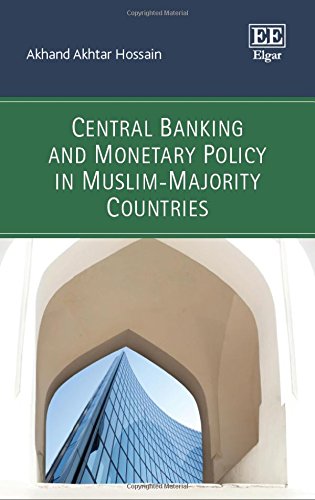
Central Banking and Monetary Policy in Muslim-Majority Countries
Author(s): Akhand Akhtar Hossain
Reviewed by: Abul Hassan, King Fahd University of Petroleum and Minerals, Dhahran, Saudi Arabia
Review
The past eight years have been an extraordinary period for central bankers in the Muslim countries. Not only have they cut interest rates in line with the developed countries, for the first time in their history, central banks in the Muslim world have greatly expanded their balance sheets, buying government bonds and other assets, etc. Well before the financial crisis in 2007-08, central banks helped society to reconsider Islamic banking and finance as a discipline. Due to extra liquidity in the Islamic banking system, central banks in the Muslim world gained new importance in world affairs because of their ability to influence economic events. A debate over their resulting power developed where participants often resorted to opinion-giving rather than argumentmaking. There was a need for a new way forward that emphasizes facts over beliefs, and Akhand Akhtar Hossain’s new book, under review, presents an excellent and comprehensive analysis of monetary policy from an academic perspective. This book covers case-studies of the Central Banks of nine Muslim-majority countries: Bahrain, Bangladesh, Egypt, Indonesia, Iran, Malaysia, Pakistan, Saudi Arabia and Turkey. Apart from the mainstream conventional banking system, a partial Islamic banking system operates in these countries with some degree of success. The case analysis for each country has been written to reflect the evolution of inflationary trends and movements, and the framework of monetary policy targeting price stability and economic growth. In the introductory chapter, the author writes, ‘one of the recurring themes of this book is that although IBF (Islamic banking and finance) may have created some complexities in central banking and monetary policy in Muslim Majority countries, its emergence has created opportunities for improving, firstly, the infrastructure of central banking and monetary policy and, secondly, application of the principles of Islamic banking’ (p. x). There is no doubt, Islamic banking and finance in the Muslim world have strengthened the argument for low and stable inflation and the observance of a strict monetary policy, especially in the matter of price stability.