Islam and the West
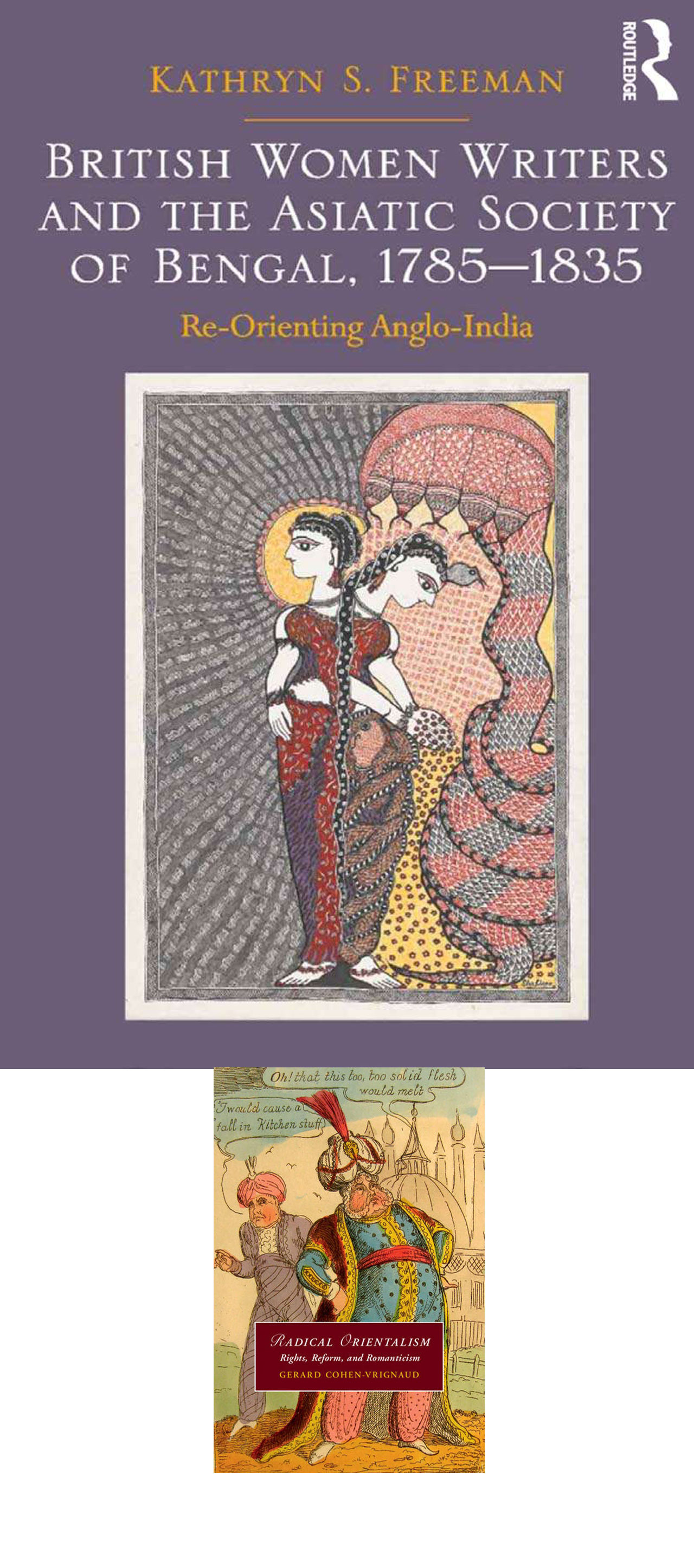
British Women Writers and the Asiatic Society of Bengal, 1785-1835 and Radical Orientalism
Re-Orienting Anglo-India and Rights, Reform, and Romanticism
Author(s): Kathryn S. Freeman & Gerard Cohen-Vrignaud
Reviewed by: Masoodul Hasan, Aligarh Muslim University, India
Review
With a sharp critical acumen reinforced by her direct acquaintance with relevant Sanskrit texts, Kathryn Freeman offers some perceptive, thematic comments in her book on the India-friendly fiction of Elizabeth Hamilton, Phoebe Gibes, and Sidney Owenson, and two plays of Mariana Starke. Their sensibilities were the vintage brew of Enlightenment, the Romantic sublime, and the Sanskrit works translated by Sir William Jones and Charles Wilkins under the aegis of the Asiatic Society of Bengal. The study covers four halfforgotten English novels, and two obscure plays, presenting some positive aspects of interfaith encounters on the Indian soil in the early colonial era. Eschewing the outline of its plot, Freeman discusses the themes of sati, women’s status and caste inequities in Indian society in Elizabeth Hamilton’s epistolary novel Translations of the Letters of a Hindoo Rajah. The narrative is unfolded through the letters exchanged between the Rajah and his confidante, Kissen, during the former’s travels at home and abroad. The liberal-minded Raja Zaarmilla has greatly benefitted from the enlightening company of a British officer, Percy. Some highlights of the indigenous culture are recounted by Sheermaal, the Brahmin. Freeman critically records the echoes of liberal feminism of Mary Wollstonecraft, exposing British hypocrisy in the novel (p. 52),