Contemporary Muslim World
Borders and Conflict in South Asia
the Radcliffe Boundary Commission and the Partition of Punjab
Author(s): Lucy P. Chester
Reviewed by: Richard Bonney, University of Leicester, Leicester, UK
Review
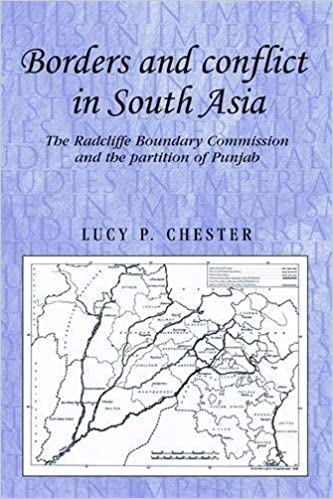
The partition of the Indian sub-continent in 1947 remains a deeply controversial episode in the process of decolonization and the development of the successor states to the British Raj. Lucy Chester leaves to Joya Chatterji the task of discussing the partition of Bengal, which was accomplished in 1999 [Joya Chatterji, ‘The fashioning of a frontier: the Radcliffe Line and Bengal’s border landscape, 1947-1952’, Modern Asian Studies, 33:1 (1999), 185-242]. Instead, she concentrates on the partition of the Punjab, which makes good sense: this was where the implementation of the task of partition was most complex; where the greater part of the violence took place, because there were three, and not two, competing religions; and where most of the migration of the population in both directions was centred. Of immediate value is the fact that the publisher has, unusually, allowed for colour maps from the period of partition and also of the canal headworks from the period before the signing of the Indus Treaty in 1960. The author makes a key point in arguing that ‘Radcliffe played a greater role in Punjab than in Bengal. In Bengal the final line followed the Congress Plan closely. In Punjab, however, Radcliffe’s line differed significantly from each of the major proposals… The Punjab parties’ extensive demands had the ironic effect of diminishing their influence over the final boundary and of increasing the importance of the chairman’s role’ (pp. 196-7).