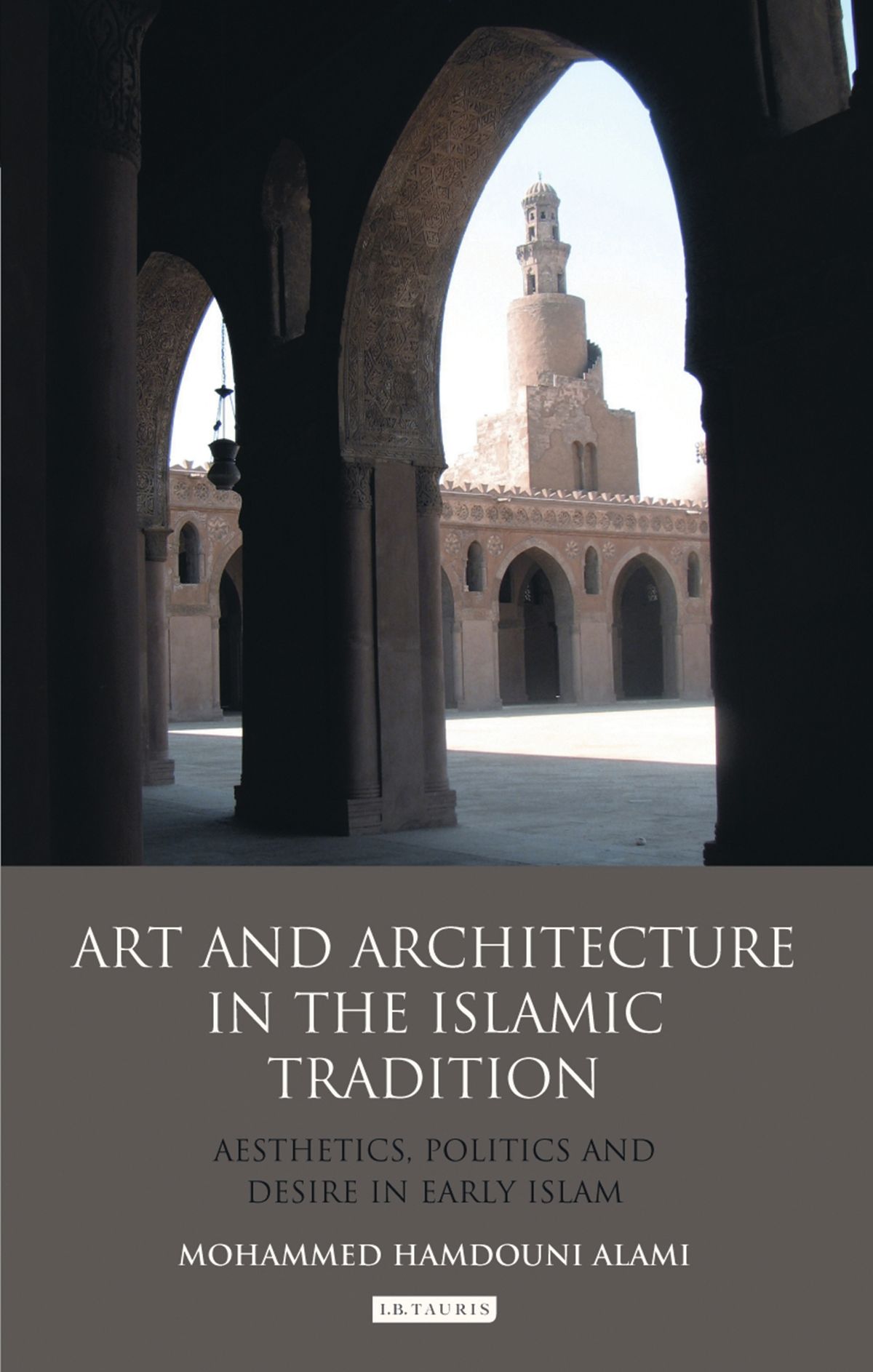
Literature, Art and Architecture
Art and Architecture in the Islamic Tradition
Aesthetics, Politics and Desire in Early Islam
Author(s): Mohamed Hamdouni Alami
Reviewed by: Cleo Cantone
Review
There are many adjectives that could sum up this timely book: insightful, well-crafted, erudite, engaging. It is therefore difficult for a review to do it justice. Alami’s book needs to be ruminated and digested in order to be fully appreciated—not only by art historians but also by anyone who is interested in Arabo-Muslim culture. For those conversant with “orthodox” books on Islamic art and architecture (Ettinghausen and Grabar’s The Art and Architecture of Islam 650-1250 or Creswell’s Early Islamic Architecture) Alami’s book will overturn some of the scholarly conventions they are familiar with, namely the dynastic, “functionalist” approach, according to which ‘the development of the typologies of architecture of the Islamic world’ are perceived ‘as a process of trial and error’, focusing mostly on the aspect of glorification of power, memorialization, ceremonial and ritual. Even before Alami touches on individual monuments or ornamental details, he sets the scene by unwrapping the philosophy of contemporary 8th-10th century thinkers, poets and linguists who formulated theories on aesthetics congenial to the artistic production of the early years of Islam.